
When it comes to straightening your teeth, two popular options stand out: Invisalign and traditional braces. Both are highly effective orthodontic treatments, but each has its unique features, advantages, and limitations. If you’re considering improving your smile and oral health, understanding the differences between Invisalign and braces can help you make an informed decision. In this blog, we’ll break down the pros and cons of both treatments, discuss costs, comfort, aesthetics, and effectiveness, and help you choose the best option for your needs.
What Is Invisalign?
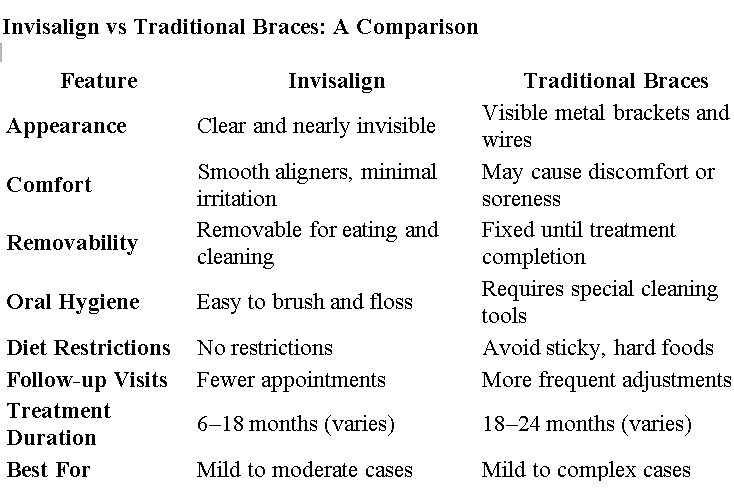
Invisalign is a modern orthodontic treatment that uses a series of clear, removable aligners to gradually shift your teeth into place. These aligners are custom-made using advanced 3D imaging technology and are nearly invisible when worn.
- Clear and discreet: Virtually invisible when worn.
- Removable: You can take them out during meals or brushing.
- Comfortable: Made from smooth, BPA-free plastic.
- Custom-designed: Based on your digital scans for precise tooth movement.
What Are Traditional Braces?
Traditional braces use metal brackets and wires attached to the teeth. Over time, the orthodontist adjusts the wires to move teeth into the desired position. Braces have been used for decades and are known for treating a wide range of complex dental issues.
Key Features of Traditional Braces:
- Fixed: Cannot be removed by the patient.
- Durable: Suitable for all types of orthodontic cases.
- Customizable: Available with colorful rubber bands for a fun touch.
- Time-tested: Proven track record for treating complex dental misalignments.
Which Is More Effective?
Both Invisalign and traditional braces are effective for straightening teeth and correcting bite issues. The right choice depends on the complexity of your case, your lifestyle, and your personal preferences.
- Invisalign is ideal for patients with mild to moderate crowding or spacing issues and who value aesthetics and flexibility.
- Braces are often better for more complex cases, including severe crowding, rotated teeth, and significant bite problems.
Cost Considerations
The cost of Invisalign and traditional braces can be similar, but it depends on the duration of treatment and case complexity.
In general:
- Invisalign tends to be slightly more expensive due to its technology and customization.
- Braces may be more cost-effective for longer or more complex treatments.
- Most orthodontic clinics offer flexible payment plans, and insurance may cover part of your treatment regardless of the method you choose.
What About Teenagers?
Parents often wonder which option is best for teens. Invisalign offers a teen-specific version with compliance indicators, but treatment success depends on how responsibly the aligners are worn. Traditional braces may be more suitable for teens who might forget or lose their aligners.
Making the Right Choice for Your Smile
At [Your Clinic Name], we understand that every patient is unique. That’s why we offer personalized consultations to help you choose the best orthodontic solution. Whether you opt for Invisalign or traditional braces, our goal is to provide you with a healthier, more confident smile.
Book Your Free Consultation Today!
Still unsure whether Invisalign or braces are right for you? Visit our clinic in [City/Area Name] for a free orthodontic consultation. Our experienced orthodontist will assess your needs, answer all your questions, and design a custom treatment plan that fits your smile goals and lifestyle.